
The Superbuy Spreadsheet, category by category
Sixteen entrances into the same catalogue, plus the part most guides skip: how to read a listing well enough that the warehouse photos hold no surprises.
Sixteen ways into the catalogue, and what inspection can prove in each
The catalogue is the same whichever tile you use; the tiles only differ in where they drop you. What changes between categories is how much a warehouse inspector can establish about the thing you picked, which is why each line below describes a limit rather than a selling point.
If you already know the item, the search box above is faster than any category.
 SneakersCategoryThe box, the anti-theft clasp and the anti-damage sticker are part of the return standard, so the free check photographs the pair without cutting any of them.
 Jackets & coatsCategoryShells photograph well. Linings, inner pockets and the inside of a zip are the parts the free check never reaches.
 HoodiesCategoryPrint placement and drawcord tips are visible in the three standard photos; how the fleece behaves after a wash is not visible to anyone.
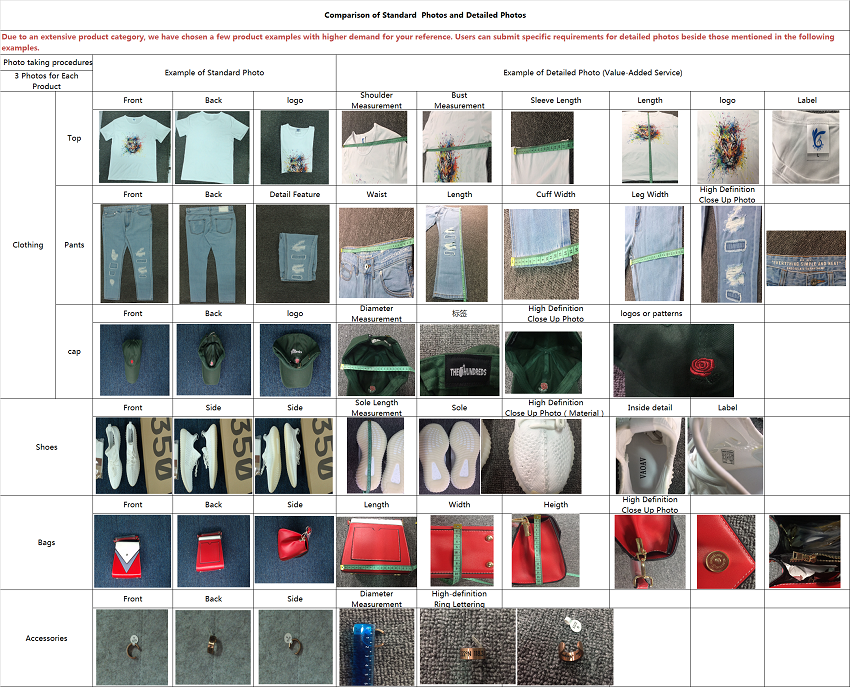
 T-shirtsCategoryFront, back and one logo angle is exactly what a tee gets for free, which is usually enough to catch the wrong print and never enough to judge the fit.
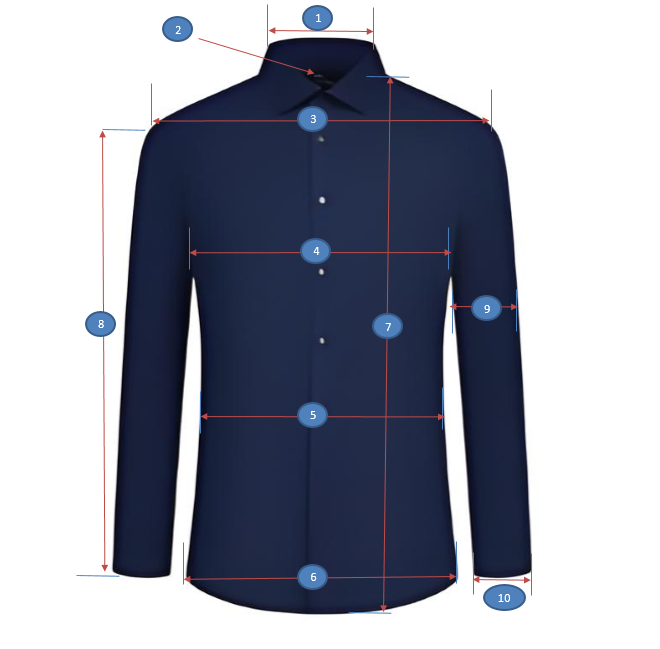
 JeansCategoryWaist and inseam only become facts when a tape measure is in the frame, and that is a photo you have to ask for.
 SweatpantsCategoryWhether both legs came out the same length is a line item on the detailed inspection, not something the free pass looks for.
 WomenswearSearch resultsThe catalogue is organised by garment, not by who wears it, so this tile runs a search instead of opening a category.
 JerseysCategoryNames, numbers and patches are applied after you order in many shops. That makes the warehouse photo the first time anyone sees the finished shirt.
 BagsCategoryHardware and stitching are the parts nobody can repair afterwards, and they need specific angles rather than a general shot.
 Hats & capsCategoryA brim survives the inspection and then loses its shape in transit. For this category the packing choice matters more than the photo.
 BeltsCategorySome shops cut a belt to the length you give them, so a measured photo is the only proof that exists before it ships.
 EyewearCategoryEyeglass prescriptions appear by name on the policy's exclusion list. Frames can be checked; lenses cannot.
 PerfumeCategorySealed means unopened. The free check stops at the shrink wrap, and breaking it is also what ends the no-reason return for this category.
 JewelleryCategoryPlating thickness has never shown up in a photograph. Judge the claim and the weight, not the shine.
 WatchesCategoryA watch counts as a 3C item: appearance only, no power-on, unless the add-on is bought after it is stored.
 ElectronicsCategoryAuthenticity, function and quality are all outside standard inspection by name. The power-on test is the only in-warehouse proof you can buy.
Everything here links out to the catalogue, which is a separate site with its own listings. This page is a guide to using it, not a shop.
Before you paste the link
Reading a listing so the warehouse photos hold no surprises
Most unpleasant surprises are decided before anyone in a warehouse picks the item up. A listing photograph is a marketing asset: it is lit, retouched and frequently borrowed from another shop entirely. The three inspection photos are not. They are taken under warehouse light against a plain surface by someone photographing two hundred items that day.
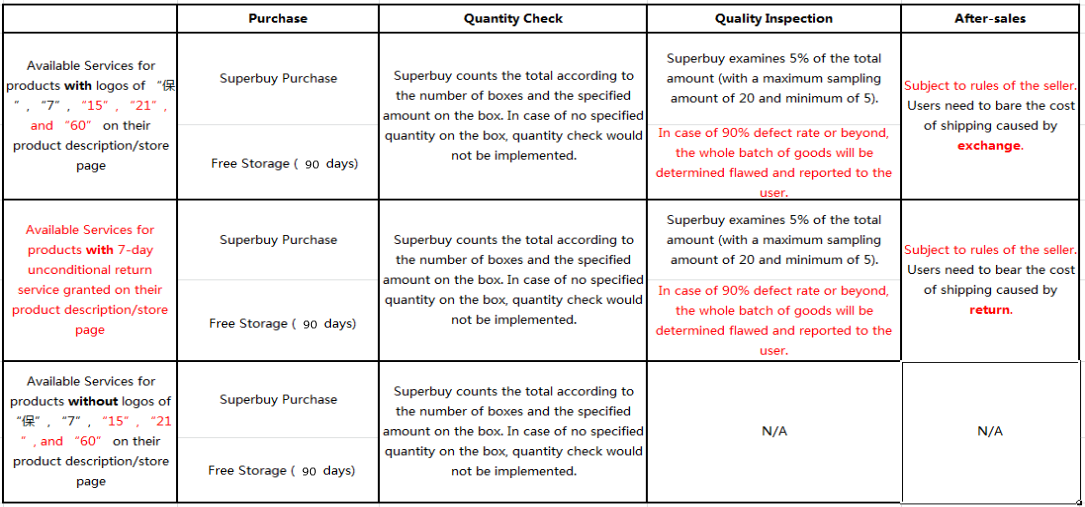
So the useful habit is to read the listing for things that will still be true under that light. Written measurements beat a model shot. A seller who publishes a size table per colourway has thought about returns. A listing whose images are mosaic-covered, or that is sold as a mystery bag or a one-yuan deal, cannot be verified at all: the policy says so directly, and in those cases only severe damage gets checked.
Variant discipline matters more than people expect. The order carries the variant you chose, and the free inspection verifies the item against the order. If the listing has eleven colourways and you picked the wrong one, the check will pass, because the goods match what you asked for.
Finally, read the gift language. If the product page states that a gift is included, its presence is verified. If the page says nothing, nothing is verified, and a gift that does arrive is yours and ships with the item.
Choosing a seller when you cannot talk to one
You are not the customer of the shop. The agent is. That changes which signals are worth anything. Store ratings and review counts still mean something, but the agent will not negotiate on your behalf beyond asking a factual question, and the answer comes back translated and flattened.
What travels well: a shop that publishes real measurements, a shop whose photographs are consistent across its catalogue rather than a scrapbook of different studios, and a shop that lists a specific material instead of a mood. What travels badly: long promotional pages that never state a dimension, and listings whose titles cram six brand words together, which is usually keyword stuffing rather than a product.
Second-hand platforms are a separate decision. Buying from Xianyu, Paipai or Zhuanzhuan attaches a flat service fee per item rather than nothing, and the policy notes the reason in its own words, that communication and after-sales handling are more complex. Expect slower answers and less recourse.
Which categories reward a careful order, and which forgive a careless one
Some categories are hard to get wrong. A plain hooded sweatshirt in a common size from a shop with measurements is close to a safe order: the free photos will show the print, the colour and the shape, and the remaining risk is how it fits, which no warehouse can answer.
Others punish inattention. Anything sealed is bought on faith unless you spend the return right. Anything electronic is bought on appearance unless you buy the power-on test. Eyewear with a prescription is never verified, because prescriptions appear on the exclusion list by name. Jerseys with names and numbers are printed after you order, so the warehouse photo is the first time anyone sees the finished shirt.
If this is your first order, the sensible shape is two or three forgiving items from one shop, inspected for free, shipped on a line you can track. The expensive, sealed or powered things are a better second order, once you know how long each step takes for your address.
What makes a useful spreadsheet, and how to spot an abandoned one
Catalogues like this one rot quietly. Listings sell out, shops close, and a card that still looks fine can lead to a dead page. Three checks take a minute each.
Open five cards at random and count how many still resolve to a live listing with a price. Two failures out of five is a catalogue nobody is tending. Then look for dates: a catalogue that says when it was last reviewed is making a claim it can be held to, and one that never mentions time is asking you to assume. Then check whether categories are genuinely different from one another, or whether the same forty items are reshuffled under sixteen headings.
The same test applies to this site, which is why every page carries the date its facts were read and names the article each figure came from. If those dates stop moving, treat the numbers as historical.
How to use the check on this site
The unseal cost check takes two choices and returns four answers. Pick the category you are buying from, then pick the thing you are unsure about, and read down: what the free inspection settles, what closes the gap and at what price, whether buying that answer opens the packaging, and what remains unknowable either way.
It is deliberately not a recommendation engine. It will not tell you to buy the detailed inspection; it tells you what the detailed inspection is for, what it costs, and what it takes away in the categories where that matters. The judgement stays yours because the thresholds are yours.
If JavaScript is off, the same answers are printed underneath as a table, generated from the identical rule set.